Land & Brush Clearing
Land Clearing & Brush Removal
Mesquite, huisache, and retama take a Valley lot back fast. RGV Tree Pros clears brush, undergrowth, and scrub trees for building pads, pasture, fence lines, and fire safety across the Rio Grande Valley.
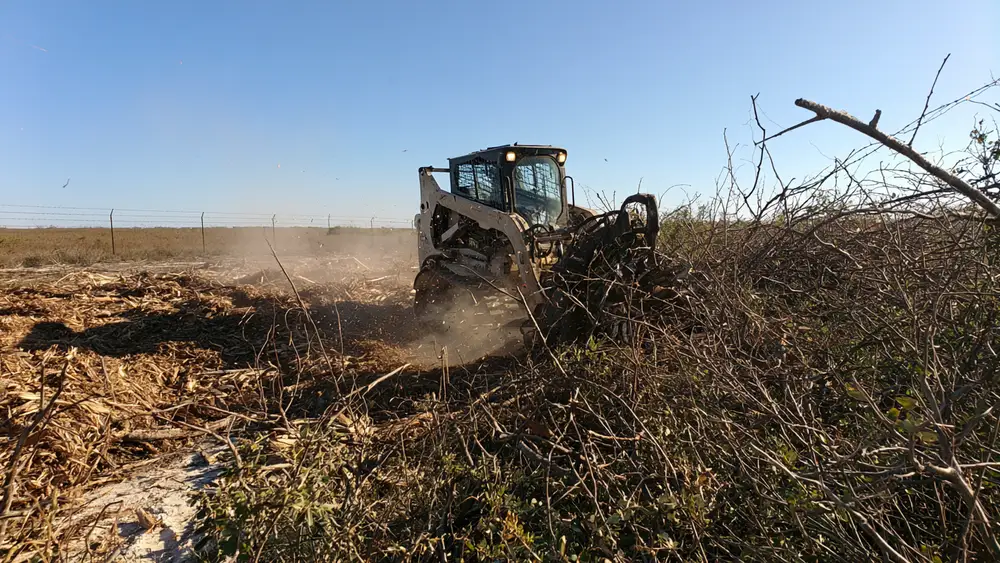
Three Ways to Clear a Lot
Which one you need depends on what happens to the ground afterward, and it is worth getting right before anybody starts cutting.
Brush hogging (shredding) is for light growth: weeds, seedlings, and scrub under about two inches. A rotary cutter knocks it flat and leaves the clippings. Cheapest option, and the right one for keeping a vacant lot mowed down or knocking back a pasture once a year.
Forestry mulching runs a mulching head over standing brush and small trees and grinds them into chip on the spot. No burn pile, no haul-off, and the mulch layer holds soil in place through the next storm. This is the workhorse for most Valley lots because it handles mesquite and huisache up to 8 inches without disturbing the ground.
Root raking and grubbing pulls the stumps and root crowns out with a rake attachment or dozer blade, then stacks the debris. It is the heaviest and most expensive option and it is the only one that actually gets the roots. If a slab, a driveway, or a septic field is going where the brush is, this is what you need.
What Grows Back, and What Doesn't
Here is the part most clearing quotes leave out. Mulching and shredding cut brush off at the ground; they do not kill it. Mesquite, huisache, and retama all resprout from the root crown, and on a wet spring you will see green again in six to ten weeks. Whitebrush and granjeno come back the same way.
That is fine if you are maintaining a lot and plan to run over it again next season. It is not fine if you thought you were done. If you want the brush gone for good, the options are grubbing the roots out or following the cut with a basal treatment, and we will tell you which one your lot actually needs at the estimate rather than selling you a clearing you will be paying for again next year.
What's Included
- Walk of the property before quoting, so the price reflects what is actually standing on it
- Clearing to the line you mark: full lot, fence line, driveway corridor, or a defined building pad
- Mulch left spread on-site, or debris stacked and hauled, whichever the job calls for
- Standing dead trees and hazard limbs taken down as part of the same visit
- Care around what stays: irrigation lines, canal banks, fences, septic, and any mature trees you want kept
Clearing for a Build vs. Clearing for Upkeep
A lot being cleared for a barndominium, a mobile home, or a slab needs the roots out and the grade left workable, which means grubbing and hauling. A lot being cleared because the county sent a letter, or because you cannot see the back fence any more, needs the growth knocked down and kept down. Those are different jobs at different prices, and the fastest way to overpay is to buy the first one when you needed the second.
Tell us what the land is for and we will quote the version that matches. If your project also needs pad building, grading, or trenching once the brush is off, that is excavation work rather than tree work, and we will say so.
Fence Lines, Canals, and Right-of-Way
A lot of Valley clearing work is a strip, not a field: a fence line swallowed by huisache, a canal bank the irrigation district needs kept clear, a caliche driveway narrowing every year. We clear corridors on acreage from Palmview and Mission out through the Mid-Valley, and around La Joya and the Monte Cristo stretch where the brush comes back hardest.
Frequently Asked Questions
How much does lot clearing cost per acre?
It depends almost entirely on what is standing there. An acre of light scrub and weeds is a fraction of an acre of mature mesquite with 8-inch trunks, and grubbing roots out costs more than mulching over them. Terrain matters too: canal banks and soft ground slow equipment down. We walk the property, then give you a firm written price per acre or for the whole job.
Will the mesquite and huisache grow back after clearing?
After mulching or shredding, yes. Those cut off at the ground and the root crown resprouts, usually within six to ten weeks in a wet spring. Only grubbing the roots out or a follow-up basal treatment stops it for good. We will tell you at the estimate which one your lot needs, because the answer changes the price and we would rather you hear it now.
Do I need a permit to clear my own land in Hidalgo County?
Clearing brush on your own rural property generally does not require a permit, but there are real exceptions: inside city limits some ordinances protect trees over a certain caliper, properties near canals or drainage districts have their own rules, and burning debris is restricted whenever the county is under a burn ban. We check before we start and we do not burn on your behalf during a ban.
What happens to all the brush and debris?
Your call, and it affects the price. Mulching leaves the material spread on-site as a chip layer, which costs less and helps hold soil through storm season. Grubbing produces stumps and root balls that get stacked for haul-off or piled where you want them. Hauling adds cost, so if you have somewhere on the property to put it, say so and we will quote it that way.
Can you clear around a fence, canal, or septic field?
Yes, and it is most of what we do on acreage. Mark what needs to stay and we work around it. Flag septic lines and any buried irrigation before we arrive if you know where they run, because a mulching head does not know what is under it and we would rather go slow than repair a line.
Other Services
Free Quote
Tell Us About Your Trees
Describe the job and we'll get back to you within one business day — usually faster.